The SME Midday Reset
Why We Need to Stop "Managing" Lunch and Start Enjoying It
Clock Pepper Salt
1/20/20263 min read
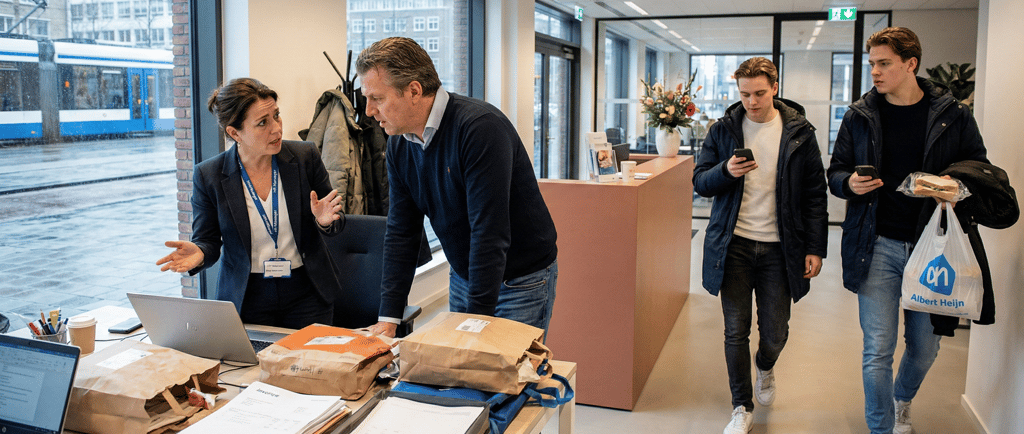
In many Dutch offices, 12:00 PM triggers a familiar, chaotic ritual. Coats go on. Teams fragment. Some rush to the nearest supermarket, joining a long queue to buy a wrapped sandwich. Others stay glued to their screens, scrolling through three different delivery apps, debating delivery fees and wait times.
This is just the practical Dutch way of getting fuel aboard before the afternoon shift.
But if we look closer, we see that this daily scramble isn't efficient. It’s exhausting. We have normalized a midday routine that adds stress rather than reducing it.
It’s time to rethink the purpose of the pause. Clock Pepper Salt isn’t just about providing food; it’s about providing a better way to work together.
Employees Reclaiming Their Mental Space
You take pride in your work. You value efficiency, and you probably cherish that 17:00 exit time so you can get on with your real life. Because of this, taking a "real" lunch break can sometimes feel indulgent, or worse, lazy.
So, you optimize. You run to the shop, grab something quick, and eat it half-distracted at your desk.
The Blind Spot: You aren't saving time; you are spending mental energy.
The 15 minutes you spend walking, queuing, and deciding what to buy is not rest. It is low-level logistical stress. Furthermore, eating while multitasking doesn't allow your brain to reset. You aren't recharging your battery; you're just running it on power-save mode. The result is the inevitable 15:00 slump.
The Clock Pepper Salt Shift: Imagine 12:00 arrives. You don’t put on your coat. You don’t open an app. You walk to the communal area, and a high-quality, exciting meal is waiting for you.
We give you those lost 15 minutes back. Instead of queuing, you are eating. Instead of rushing, you are actually pausing. You get organized fuel, you connect with a colleague, and you return to your desk genuinely refreshed, ready to finish strong and leave on time.
A fragmented team is a slower team : The Hidden Cost of Friction
CEO looks at the bottom line. You value operational rhythm and focus.
The Blind Spot: You are mistaking busyness for productivity.
There is hidden operational friction in the current model. How much productive time is lost at 11:30 AM when the "What are we ordering?" slack messages start flying? How much focus bleeds away when three different delivery drivers interrupt the reception area between 12:15 and 12:45?
Furthermore, when everyone eats alone in their operational silos, your company loses its most valuable organic communication channel.
The Clock Pepper Salt Shift: We offer you operational certainty.
By centralizing lunch into one high-quality, reliable drop-off, you eliminate the pre-lunch distraction and the post-lunch logistics chaos. You create a predictable daily rhythm.
More importantly, you create a gravitational pull towards a shared table. You aren't forcing "team building"; you are simply providing the space for it to happen naturally over good food. The investment isn't just in sandwiches; it's in a synchronized, re-energized team for the second half of the day.
From Logistics to Culture
Human Resource Managers are the guardian of the company culture and employee well-being. Yet, you often find yourself acting as the Complaint Department for lunch. You deal with the frustration of late deliveries, the complexity of dietary requirements, and the guilt of seeing people burned out at their desks.
The Blind Spot: You are spending your talent managing logistics instead of nurturing culture.
You know that connection is vital for retention, especially in a hybrid world. But trying to force connection through awkward Zoom drinks or quarterly events is an uphill battle. The best culture happens in the small, daily moments that you cannot dictate.
The Clock Pepper Salt Shift: Let us handle the logistics. We simplify the chaos of dietary needs and delivery timings into one reliable stream.
We provide you with the oldest, most effective culture-building tool in history: breaking bread together.
When the meal is curated and ready, employees naturally gather. The playing field levels. The junior staffer chats with the director. Stress levels drop. Your role shifts from managing meal-time complaints to facilitating genuine human connection. It is the simplest, most consistent wellness initiative you can implement.
info@clockpeppersalt.com
+31-681186536
A Clock Pepper Salt Company.
btw-id: NL005150091B25
© 2026. All rights reserved.